


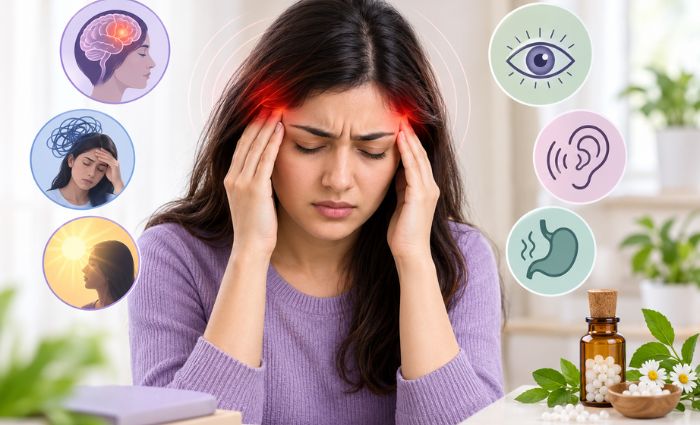
A migraine is a health condition that is more than an ordinary headache. It is a
neurological disorder in which one suffers from severe to intense pain in the
head along with accompanying symptoms like nausea and vomiting, as well as
increased sensitivity to light and sound. Some people are unable to continue
working, studying, sleeping, or performing daily activities due to migraine
attacks.
The triggers and symptoms of migraines can be different for each individual.
When you find out what causes your attacks, you will be able to cope with
them better.
In this guide, Homeoheal Hub discusses in detail what the main causes of
migraines are, their symptoms, triggers, methods of diagnosis, treatment, and
prevention methods in simple language.
What Is a Migraine?
A migraine is a neurological disease that results in recurrent bouts of head
pain. The discomfort has a throbbing sensation and can occur unilaterally, but
can also spontaneously shift from one side of the head to the other.
One attack of migraine may last for hours or even days. There are people who
get susceptibility symptoms before the onset of pain, while others have no
signs prior to a migraine.
Migraine differs from the ordinary tension headache in the sense that it may
have other symptoms interconnected with the incipient pain, such as nausea
and sensitivity to lights, sounds, and smells.
Common Symptoms of Migraine
Migraine symptoms can differ between individuals. Common symptoms
include:-
- Throbbing or pulsating headache
- Pain on one or both sides of the head
- Nausea or vomiting
- Sensitivity to bright light
- Sensitivity to loud sounds
- Increased sensitivity to certain smells
- Blurred or disturbed vision
- Dizziness or light-headedness
- Difficulty concentrating
- Fatigue or unusual tiredness
Some people experience migraine with aura. Aura refers to temporary
neurological symptoms that may occur before or during a migraine attack.
What Is Migraine Aura?
Aura may cause:
- Flashing lights or bright spots
- Zigzag or wavy lines in the field of vision
- Temporary visual changes
- Tingling or numbness
- Difficulty speaking in some cases
Aura usually develops gradually and is temporary. However, new or unusual
neurological symptoms should be evaluated by a healthcare professional
because other conditions can cause similar symptoms.
What Causes Migraine?
There is no singular reason behind migraine attacks for people. The occurrence
of migraines is attributed to several factors including genetic predisposition
and various environmental triggers.
Risk of developing migraines has been improved by the presence of migraines
in the family history.
here known contributors of migraine are:-
1. Genetics
Migraine is hereditary. Having someone in the family suffering from migraines
might put someone at risk.
2. Change in Brain Function
Migraine involves complex changes in the processing of pain in the brain.
Certain types of nerves also can affect the way we feel pain in certain
conditions.
3. Hormonal Changes
Some people are affected more by their hormone levels than others. Some
people experience migraine whenever they have their periods or during other
times of the hormone fluctuations.
4. Environmental Factors
Bright lights, strong odors, loud noises, or other environmental factors can
trigger migraine in some cases.
5. Lifestyle Factors
Having no perfect sleep schedule, ongoing stress, skipping meals, or even
excessive physical activities can cause migraine.
What Are the Triggers of Migraine?
There is no singular reason behind migraine attacks for people. The occurrence
of migraines is attributed to several factors including genetic predisposition
and various environmental triggers.
Risk of developing migraines has been improved by the presence of migraines
in the family history.
Common Migraine Triggers
A trigger is something that may increase the likelihood of a migraine attack.
Triggers are not the same for everyone.
Common migraine triggers include:-
- Stress and emotional tension
- Lack of sleep
- Too much or too little sleep
- Skipping meals
- Dehydration
- Bright or flashing lights
- Loud noises
- Strong smells
- Changes in weather
- Excessive screen exposure for some individuals
- Hormonal fluctuations
- Sudden changes in daily routine
- Certain foods or beverages in some people
Keeping a migraine diary can help identify personal patterns.
For example, record:
Date → Sleep → Meals → Water intake → Stress → Possible trigger →
Symptoms → Duration
Over time, this information may help you and your healthcare professional
understand your migraine pattern.
Migraine Attack Phases
Migraine might manifest in several phases, but not everyone will go through all
phases.
1. Prodromal Phase.
Prodrome begins before the pain of the headache sets in. Symptoms can be as
follows:
- Mood changes.
- Cravings for food.
- Loss of energy.
- Frequent yawning.
- Lack of concentration.
- Sleep changes
2. Aura.
Some people experience aura before or during the headache. Aura symptoms
usually include some kind of visual disturbance.
3. Headache Phase.
Pain might be mild or very severe depending on the person. Some people may
feel the headache worsening when engaging in physical activities. Nausea,
vomiting, and photophobia might occur.
4. Postdrome Phase.
Some people may feel tired and exhausted after the headache subsides.
Not everyone experiences all of the four phases.
How Is Migraine Diagnosed?
There is no single blood test that confirms migraine. Diagnosis is usually based
on your symptoms, medical history, headache pattern, and physical or
neurological examination.
During an evaluation, a healthcare professional may ask about:
- When your headaches started
- How frequently they occur
- How long each attack lasts
- Where the pain occurs
- What the pain feels like
- Other symptoms such as nausea or visual changes
- Possible triggers
- Family history
- Medications you are taking
- Any changes in the pattern of your headaches
In certain situations, additional tests or imaging may be recommended to rule
out other causes of headache.
Migraine Treatment Options
Migraine treatment generally focuses on two goals:
1. Managing an attack when it occurs
2. Reducing the frequency or severity of future attacks
Treatment depends on the person’s symptoms, migraine frequency, medical
history, and other individual factors.
Acute Migraine Treatment
Acute treatment is necessary as soon as migraine symptoms manifest.
Depending on the patient’s problem, a doctor can suggest a variety of
medications for migraine relief.
It’s crucial to consult medical professionals when treating migraine attacks
since using medication for chronic headaches will lead to headache from
medication overuse.
Preventive Migraine Treatment
Preventive treatment can be recommended if migraine attacks happen
regularly, are serious, long-lasting, and seriously disrupt normal activities.
Preventive approaches may involve taking medication prescribed by a
physician, leading the lifestyle changes, managing triggers, and other kinds of
treatment provided by a medical specialist.
Homeopathy and Migraine management
Some people may try using homeopathic approaches to manage migraines. In
homeopathy, the physician takes into account a variety of symptoms that a
patient has rather than just focusing on where the headache is felt.
At HomeoHeal, an individual approach can be applied when looking at factors
like:
- Frequency of migraines
- Type of headache
- Related symptoms
- Triggers
- Sleep and lifestyle habits
- Personal medical history
However, homeopathy should never substitute immediate care and decision
making in case a patient suffers from a new, unexpected headache.
Lifestyle Strategies That Could Help Control Migraine
Along with medical treatment, healthy habits may assist some people lower
their migraine triggers.
Get Enough Sleep
Aim to get enough sleep on a regular basis as disturbances in sleep may lead to
headaches for some people.
Stay Hydrated
Drink a sufficient amount of water each day, and don’t wait very long before
drinking again.
Eat Regularly
Going without food may also cause headaches for some people. Therefore, try
to eat regularly.
Control Stress
Stress is another common cause of migraines. Relaxation techniques, breathing
exercises, or any other suitable stress control measures may help.
Limit Screen Time
If you notice that screen time has a negative influence on your headaches, it is
necessary to schedule your breaks, as well as change brightness and other
parameters of the screen.
Keep a Migraine Diary
With the help of a migraine log, it becomes easier to spot pattern concerning
migraine attacks.
When Should You See a Doctor for a Migraine?
Consider speaking with a healthcare professional if:-
- Headaches occur frequently
- Migraine attacks are becoming more severe
- Your usual headache pattern changes
- Headaches interfere with work, school, sleep, or daily activities
- You frequently need pain medication
- You are experiencing migraine symptoms for the first time
Seek Urgent Medical Care for Certain Headaches
A sudden, extremely severe headache, especially one that reaches maximum
intensity very quickly, requires urgent medical evaluation.
You should also seek urgent care if a severe headache occurs with symptoms
such as:-
- Loss of consciousness
- Seizure
- New weakness or numbness
- Significant difficulty speaking
- Severe confusion
- High fever with a stiff neck
- A serious head injury
These symptoms may indicate a condition other than migraine and should not
be self-treated.
Migraine Prevention: Realistic Steps
Although you might not be able to prevent all of your migraines from occurring, being able to
recognize your own triggers can help.
The process is simple:
Identify → Monitor → Minimize → Follow → Review
Be sure to identify potential triggers, monitor your symptoms, minimize triggers that can be
avoided, follow your prescribed course of treatment, and assess your results with your
physician.
FAQs
What is the main cause of migraine?
There is no single factor that causes migraines. Instead, migraine is affected by
a variety of conditions, including neurological, genetic, hormonal, and
environmental factors. Certain triggers can lead to attacks in different
individuals.
What are the most common migraine symptoms?
Common symptoms of migraine are pulsating pain in the head, nausea,
vomiting, and increased sensitivity to sound and light. In some cases, visual or
sensory changes, called aura, can be present.
Can stress cause migraine?
While stress has been analyzed as a triggering factor in exacerbating attacks for
some people, changes in stress levels, sleeping habits, eating patterns, and day
to-day habits play a role in making migraines more frequent.
How long can a migraine last?
A migraine episode can last multiple hours and even extend up to several days,
depending on the individual.
Can migraine be cured permanently?
Currently, there is no permanent cure for migraine, but migraine treatment and
lifestyle changes can be beneficial in preventing migraine attacks or making
them less acute.
Can dehydration trigger migraine?
Yes, dehydration is one risk factor for headaches and migraines. As a result,
keeping hydrated can help in reducing the risk of those issues.
Can homeopathy help with migraine?
People may seek homeopathic care for migraine management. Because
migraine can have different causes, symptoms, and patterns, an individualized
assessment is important. Homeopathy should not delay medical evaluation
when symptoms are severe, sudden, new, or unusual.
Final Thoughts
Migraine is not only limited to your head; it can disrupt other aspects such as
your ability to concentrate, your productivity, the quality of your sleeping, and
your life overall. Knowing what triggers the migraine and the underlying
symptoms will help with the management of the disease.
If you have symptoms of migraine that keep coming back, it is better to talk to
an appropriate medical professional rather than treating yourself. If you get
proper treatment, you will get access to any other assessment if necessary.
HomeoHeal will focus on learning the symptoms and history of health problems
of the patient when applying homeopathy. If you have recurring headaches and
want to know what to do with them, seek appropriate medical help.
Take the First Step Toward Better Migraine Management
Don’t let recurring migraines disrupt your daily life. Connect with HomeoHeal for a personalized consultation and discuss your migraine symptoms, triggers, and treatment options with a healthcare professional.
👉 Book Your Consultation Today:- https://homeohealhub.com/contact-us/